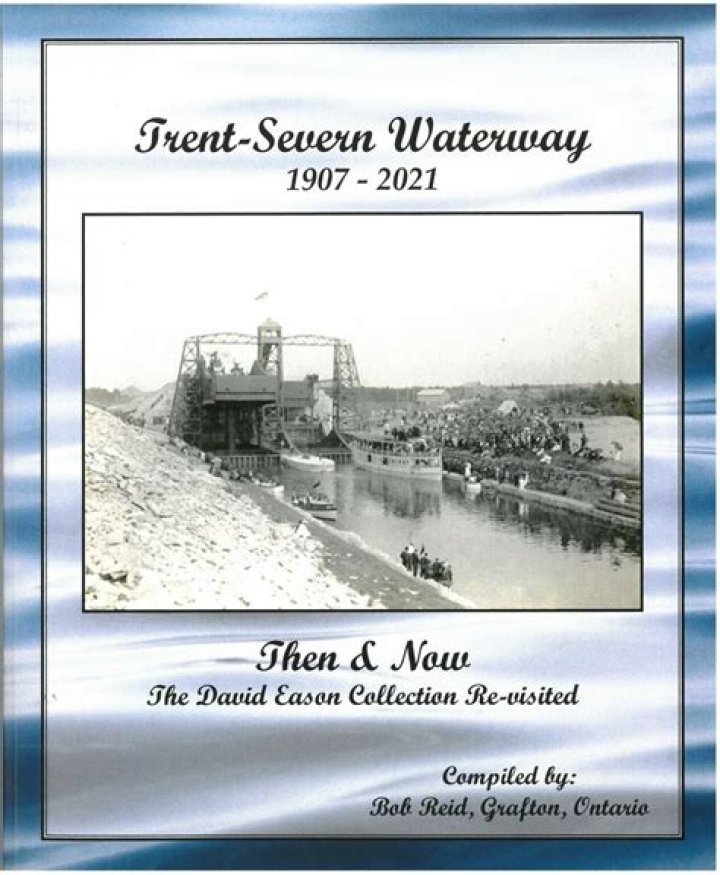
The canal was surveyed as a military route, but the first lock was built in 1833 as a commercial venture. This connected a number of lakes and rivers near the centre of the waterway, opening a large area to navigation by steamship.
Is the Trent Canal man-made?
In 1920, after almost a century of construction, all of the Trent-Severn’s linkages, consisting of over 40 locks, some 50km of man-made canals, approximately 150 dams and countless areas that were altered by dredging or flooding, created a fully-navigable system.
How deep is the Trent Canal?
Trent Canal’s 240-mile (386-km) main course consists of 33 miles (53 km) of man-made channels (6 to 8 feet [1.8 to 2.4 metres] deep), marine railways at Big Chute on the Severn River, and 42 locks.
How many locks does Trent Severn have?
44 locks
Featuring 44 locks, boaters can travel end to end – or from any point along the system to each of the connected great lakes and beyond.
Is the Trent-Severn Waterway man made?
The Trent – Severn Waterway National Historic Site of Canada is a natural and man-made waterway that meanders nearly 400 km across central Ontario linking Georgian Bay to the Bay of Quinte.
What year did construction begin on the Trent-Severn Waterway?
1833
The Trent-Severn Waterway, conceptualized back in 1833 and finally built between 1879 and 1920, did link Lake Ontario with Georgian Bay. But aside from a period serving the lumber industry, it never had much chance to function as a commercial waterway.
Is Rice Lake part of the Trent?
Rice Lake is a lake located in Northumberland and Peterborough counties in south-eastern Ontario. The lake is located south of the city of Peterborough, and the Kawartha Lakes and north of Cobourg. It is part of the Trent-Severn Waterway, which flows into the lake by the Otonabee and out via the Trent.
Who owns the Trent-Severn Waterway?
IN THE FINAL WEEK OF LAST SEPTEMBER, I set off from Happy Days Houseboats on Pigeon Lake to experience the Trent-Severn. Co-owner Jill Quast issues basic waterway instructions for the 40-foot vessel, a kind of floating RV vehicle, complete with kitchen and, notably, a set of maps.
What year was the Trent-Severn Waterway built?
1920
When was the Rideau Canal built?
1832
Rideau Canal/Years built
The Rideau Canal was officially opened in the summer of 1832. It was an amazing achievement. For most of its length of 202 km, the new canal passed through an unsettled wilderness where By and his workers managed to create forty-seven locks, some of them posing a considerable engineering challenge.
How much would it cost to build the Trent-Severn Canal?
(Courtesy: The Trent-Severn Waterway Archives) In April in 1935, a survey of the waterway predicted that to build a canal from Lake Simcoe to Rice Lake would require 32 locks and 13 dams at a cost of $1,310,340.
Who was the first person to use the Trent Severn Waterway?
Lock One on the Trent-Severn Waterway. Samuel de Champlain was the first European to travel the network of inland waters from Georgian Bay to the Bay of Quinte with the Hurons in 1615. It was this same route that would later be canalized and become the Trent–Severn Waterway.
What was life like for Italian workers on the Trent-Severn Waterway?
( Courtesy: The Trent-Severn Waterway Archives) Living conditions for the labourers who did the pick and shovel work were often difficult. Italian workers lived in these sod huts at Frankford in the early 1900s. ( Courtesy: The Trent-Severn Waterway Archives)
What was the lumber industry like on the Trent-Severn Waterway?
The lumber industry played an important role in the early history of the Trent-Severn Waterway. Timber slides, such as this, enabled the log drives to reach the mills located along the Waterway.