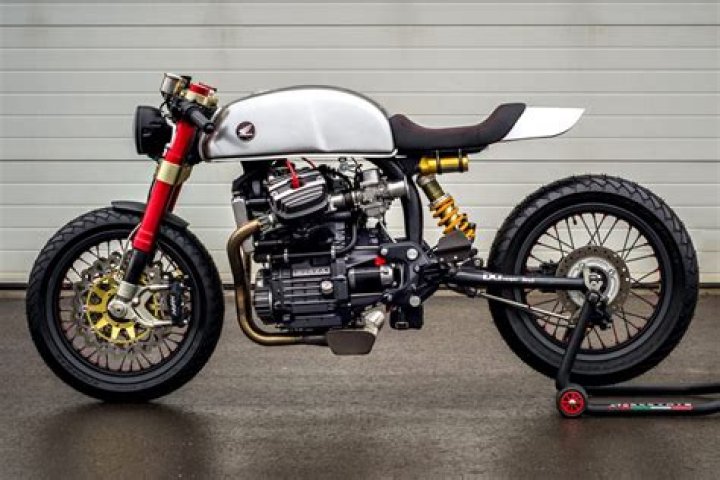
The name cafe racer provides most of the backstory to the style of bike. Cafe racers find their birthplace in post-World War II Britain, where car ownership was still low, particularly among young people.
What is the origin of Cafe racing?
Wallace Wyss, the famed American automotive writer and advertising consultant, stated that the term cafe racer should be attributed to a “motorcyclist who played at being an Isle of Man road racer” but was actually “someone who owned a racy machine but merely parked it near his table at the local outdoor cafe.”
Is it hard to build a cafe racer?
Building a cafe racer is more about finding a suitable frame and engine that requires minimal modification. The more time you spend on working on the frame, the longer—and more expensive—the build will take. With the right amount of money and patience, you can turn most motorcycles into a cafe-style build.
What is the dry weight of a cafe racer?
We’ve set this one at 2nd place because the fact that the bike is actual very heavy for a cafe racer: the dry weight is 214kg. Despite the fact that the 865cc parallel-twin has more power (69hp and 51Nm) than the Guzzi V7 Racer, it has also more “fat” to move.
Does KTM make a cafe racer?
While KTM doesn’t offer any cafe options, its sister company Husqvarna offers the Vitpilen 401 and 701. BMW’s R nineT Racer is the Bavarian take on the genre powered by the iconic boxer twin. The styling of the Royal Enfield Continental GT 650 look as close to factory cafe racer as a manufacturer could build.
What motorcycles had cafe racers in the 70s?
During the latter half of the ’70s, BMW, Honda, Moto Guzzi, and even Harley-Davidson built factory cafe racer models. Most of these featured the common cafe racer styling, without any increase to performance over their standard motorcycle counterparts.