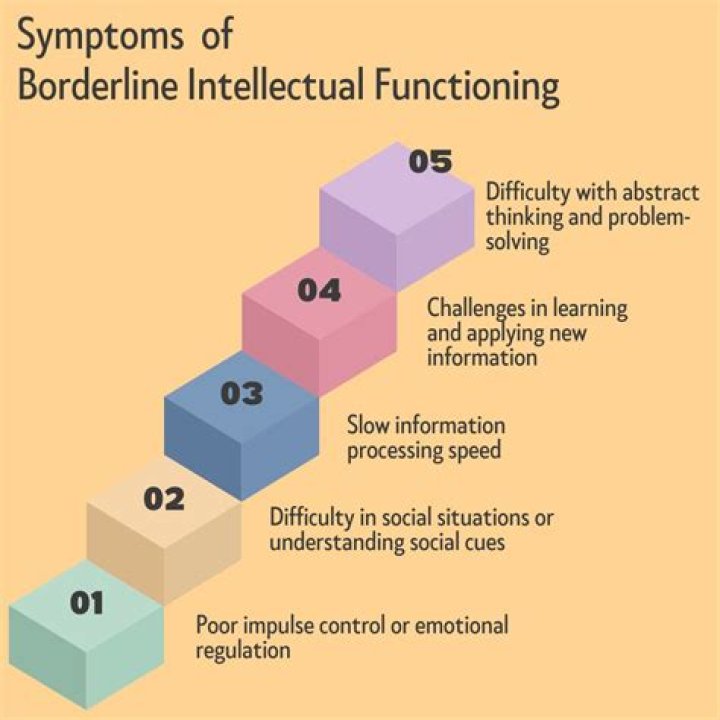
Borderline intellectual functioning (BIF) is characterized by heterogeneous cognitive difficulties, with an intelligence quotient (IQ) between 70 and 85 points, and a failure to meet the developmental and sociocultural standards for personal independence and social responsibility required in daily life.
Do I have borderline intellectual functioning?
Signs of Borderline Intellectual Functioning Difficulty adapting to changes or learning new skills. Difficulty achieving independent living, executing daily life activities, and participating with others in social situations. Difficulty managing emotions and aggression, with moods swings and low frustration tolerance.
What causes borderline intellectual functioning?
People with borderline intellectual functioning typically have difficulties with learning, reasoning, planning, abstract thinking, and judgment. Lower than average intellectual functioning can be caused by birth injury, infections, genetics, fetal alcohol syndrome, or environmental exposure to toxins.
What are the signs of intellectual disability in adults?
Such challenges may include the following:
- Memory problems.
- Attention problems.
- Difficulties interacting socially.
- Impaired self-esteem or lowered sense of self-worth.
- Difficulties finding and maintain employment as adults.
- Being unable to live on one’s own due to required assistance and supervision.
What does an 84 IQ mean?
70 to 84: Borderline mental disability. 85 to 114: Average intelligence. 115 to 129: Above average or bright. 130 to 144: Moderately gifted. 145 to 159: Highly gifted.
Does intellectual disability go away?
Intellectual disability is a life-long condition. However, early and ongoing intervention may improve functioning and enable the person to thrive throughout their lifetime.
Does intellectual disability run in families?
Each time we have a child, we randomly pass on one copy of each gene. Therefore, each child born to a parent with dominant form of ID has a 50:50 chance of inheriting the dominant gene and thus, having an intellectual disability.
What are the 4 levels of an intellectual disability?
There are four levels of ID:
- mild.
- moderate.
- severe.
- profound.
What are the signs of high intelligence?
Positive signs of high intelligence
- Good memory and thinking ability.
- Good attitude and hard-working nature.
- General and Tacit Knowledge.
- Good language proficiency and reasoning skills.
- Reliable decision-making.
- Trusted by others.
- High Creativity.
- High Achievements.
What does borderline intellectual functioning mean?
Borderline intellectual functioning is a condition characterized by cognitive abilities that are lower than the average, but not at the level of full mental retardation.
What level IQ is considered mental retardation for an adult?
An IQ under 70 is considered as “mental retardation” or limited mental ability. 2.27% of the population falls below 70 on IQ tests. The severity of the mental retardation is commonly broken into 4 levels: Genius or near-genius IQ is considered to start around 140 to 145.
What does borderline IQ mean?
Borderline intelligence (also called borderline intellectual functioning or borderline mental disability) is a category of intelligence in which a person has lower than normal mental ability. IQ levels in this case are between 70 and 85.
How do I deal with borderline personality disorder?
Psychotherapy — also called talk therapy — is a fundamental treatment approach for borderline personality disorder. Your therapist may adapt the type of therapy to best meet your needs. The goals of psychotherapy are to help you: Focus on your current ability to function.